


Gifting Made Simple
Give the Gift of ChoiceClick below to purchase a St. Laurent Shopping Centre eGift Card that can be used at participating retailers at St. Laurent Shopping Centre.Purchase HereHome
Pavilion - Chinese Checkers
Toys 'R' Us
Loading Inventory...
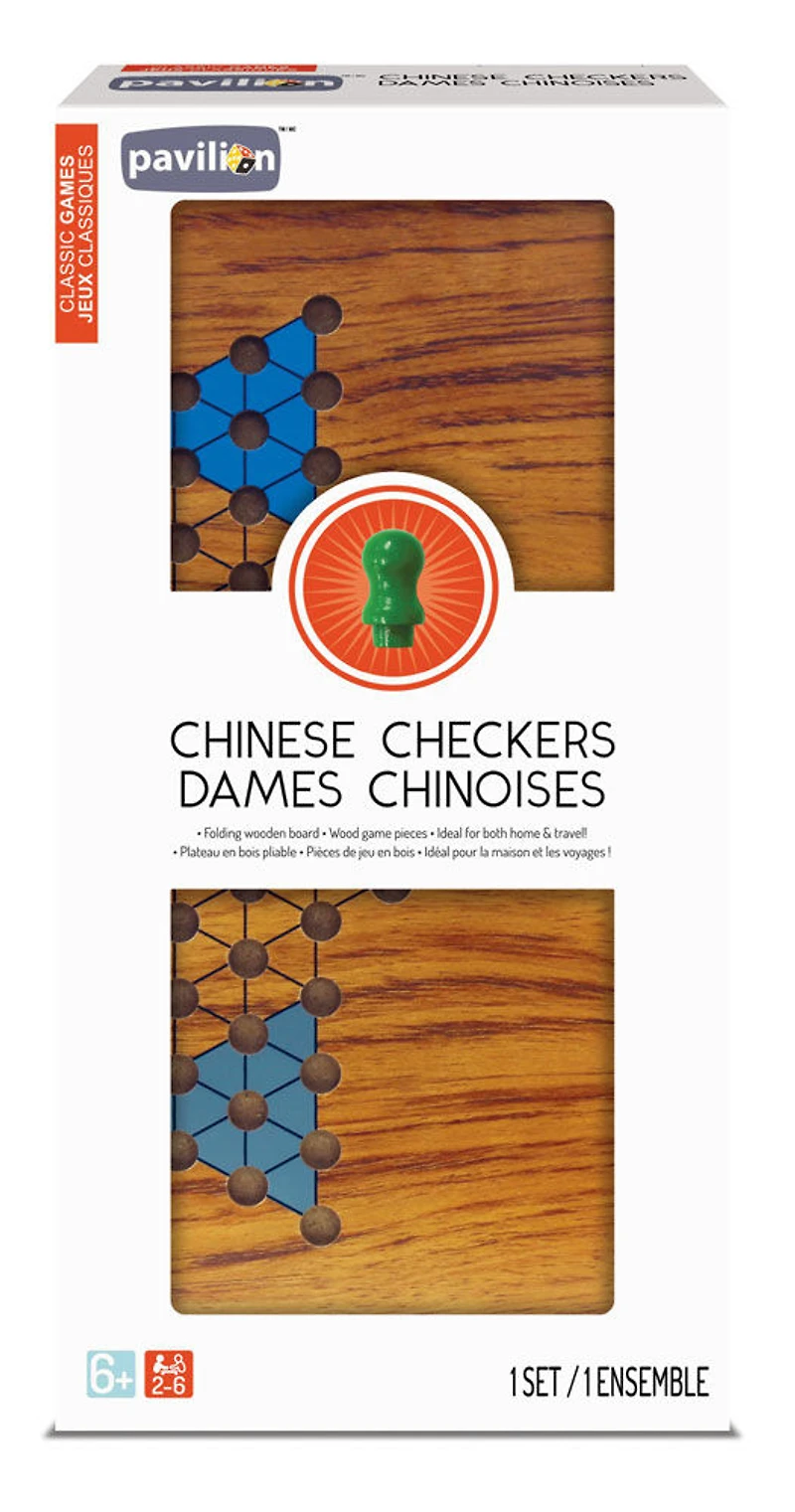
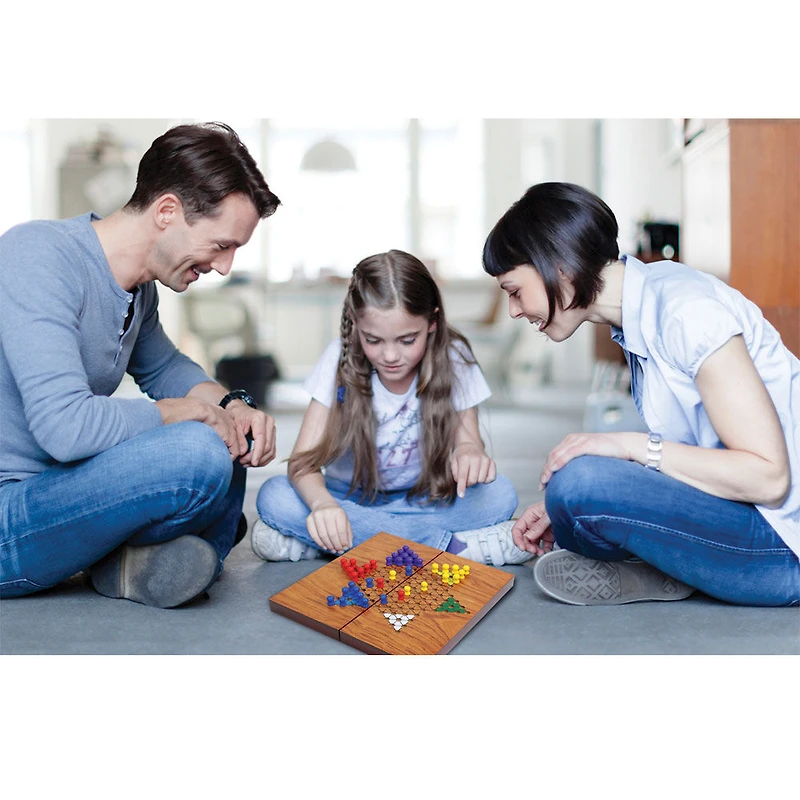
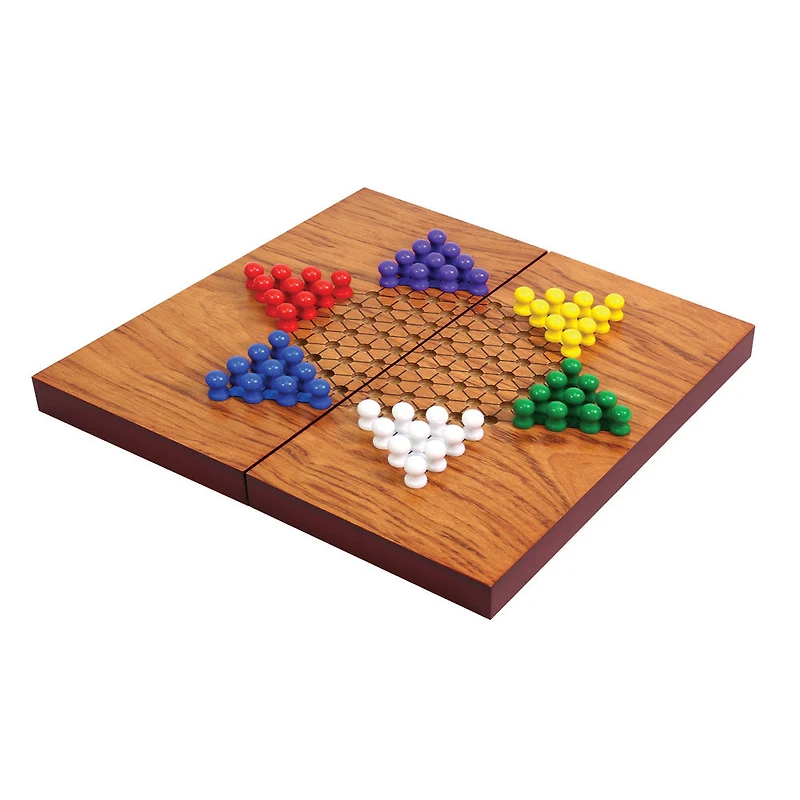
Pavilion - Chinese Checkers
By Pavilion
Current price: $11.48
Toys 'R' Us
Pavilion - Chinese Checkers
By Pavilion
Current price: $11.48
Loading Inventory...
*Product information may vary - to confirm product availability, pricing, shipping and return information please contact Toys 'R' Us
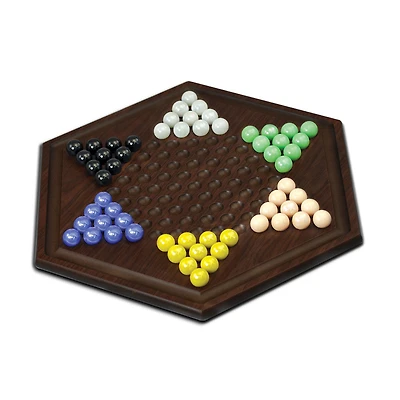
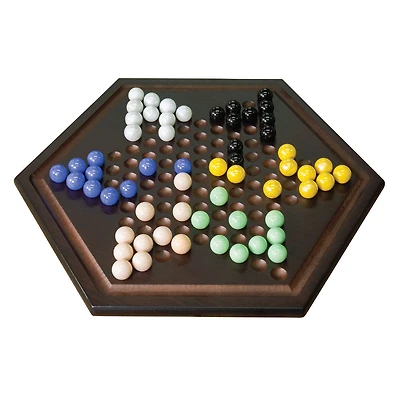
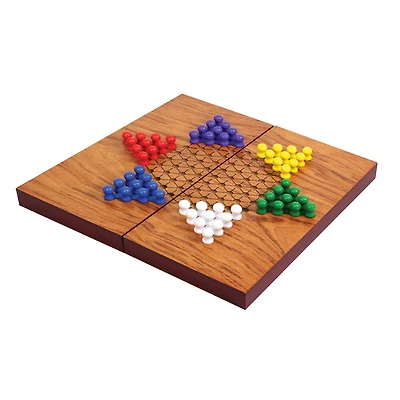
Folding wooden board
Wood game pieces
Ideal for both home and travel!
Content : 60 Coloured playing pieces, Folding wood board, Instructions
With a name like Chinese checkers it would be logical to assume the game originated in China and had some link to the ancient game of checkers. Surprisingly, neither is correct. Most historians agree a similar game first appeared in Germany under the name 'Halma' (meaning 'jump') during the latter stages of the 19th century. Like Chinese checkers, the game involved trying to move your pieces from one corner of the square board to the opposite one. The game evolved into its current 6 point star design under the name 'Stern-Halma', which translates to Star-Jump. The "Chinese" aspect of the name came about once the game was brought over to America by Pressman Toys in 1928, using the name "Hop Ching Checkers" to take advantage of the interest in that era for "Oriental mystique". The game was a huge success for Pressman Toys. Eventually they modified the name to its current incarnation "Chinese Checkers". Even in China, the game is known as "Chinese Checkers" despite having no actual ties to the country. The objective of the game remains true to its Halma origins, with the first player able to move all their pieces across the board to the opposite side declared winner. The game is still widely played all over the world.
Folding wooden board
Wood game pieces
Ideal for both home and travel!
Content : 60 Coloured playing pieces, Folding wood board, Instructions
With a name like Chinese checkers it would be logical to assume the game originated in China and had some link to the ancient game of checkers. Surprisingly, neither is correct. Most historians agree a similar game first appeared in Germany under the name 'Halma' (meaning 'jump') during the latter stages of the 19th century. Like Chinese checkers, the game involved trying to move your pieces from one corner of the square board to the opposite one. The game evolved into its current 6 point star design under the name 'Stern-Halma', which translates to Star-Jump. The "Chinese" aspect of the name came about once the game was brought over to America by Pressman Toys in 1928, using the name "Hop Ching Checkers" to take advantage of the interest in that era for "Oriental mystique". The game was a huge success for Pressman Toys. Eventually they modified the name to its current incarnation "Chinese Checkers". Even in China, the game is known as "Chinese Checkers" despite having no actual ties to the country. The objective of the game remains true to its Halma origins, with the first player able to move all their pieces across the board to the opposite side declared winner. The game is still widely played all over the world.
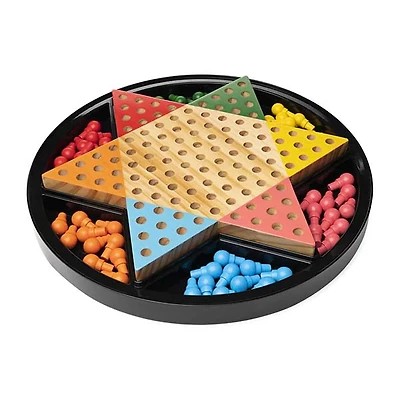
You May Also Like







More About Toys 'R' Us at St. Laurent Shopping Centre
At Toys"R"Us Canada, we inspire endless possibilities of fun, imagination and wonder with our toys.
1200 St. Laurent Blvd, Ottawa, ON K1K 3B8, Canadahttp://toysrus.ca/
Find Toys 'R' Us at St. Laurent Shopping Centre in Ottawa, ON
Visit Toys 'R' Us at St. Laurent Shopping Centre in Ottawa, ON